
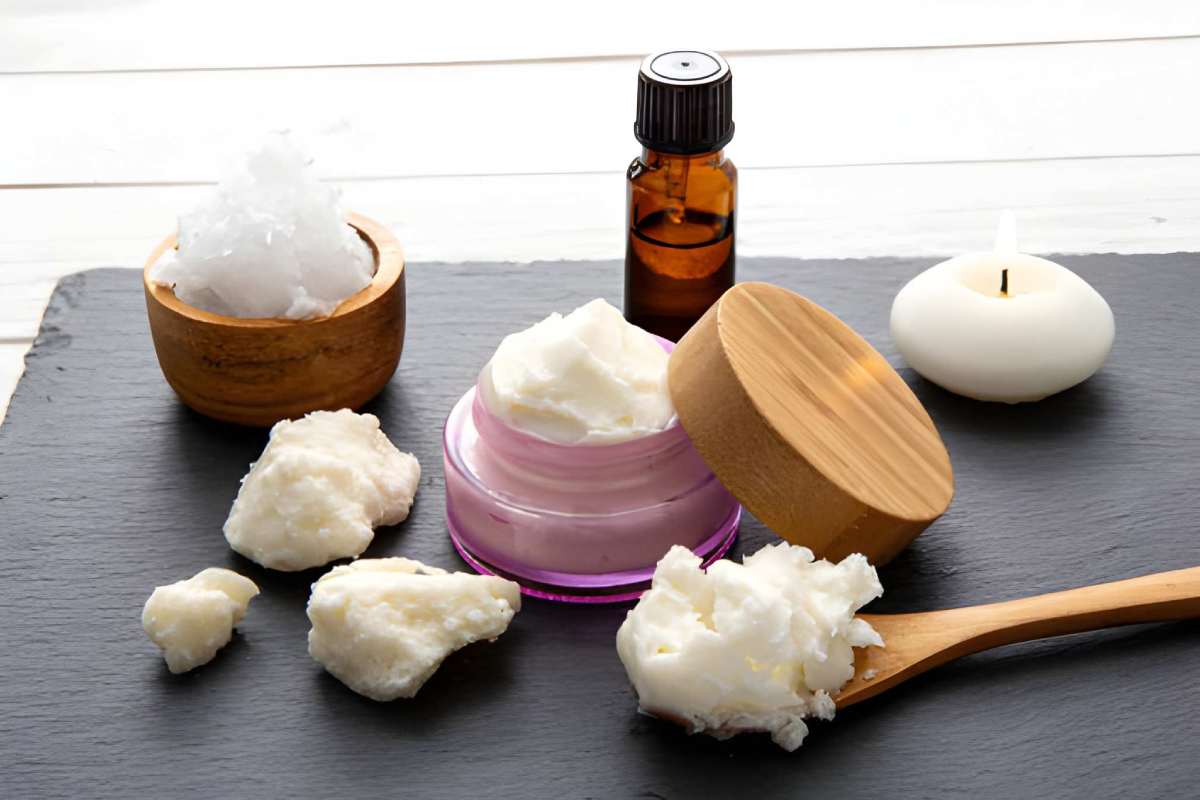
Introduction
Let’s learn about the main properties of shea butter for appearance and how to use it: its benefits for the face are many and varied, including:
1. Moisturising
Facial moisturising is one of the best uses of shea butter, as it helps retain moisture and reduce water loss by starting a barrier on the skin’s surface, helping reduce the appearance of roughness and dry patches.
Many people prefer this natural ingredient as a moisturiser due to its low fat content. Furthermore, unlike other oils, it does not turn into soap when it comes into contact with an essential alkaline substance, thus maintaining its moisturising capacity.
2. Anti-aging
Shea butter promotes cell regeneration and softens the skin, which helps reduce the arrival of fine lines and wrinkles. Therefore, it’s not surprising that it is present in natural anti-ageing facial products.
It also helps stimulate collagen manufacture and improve blood circulation in the skin. It also covers vitamins A and E, which help maintain the skin’s freshness, radiance, and nourishment, and can help prevent premature wrinkles when used regularly.
3. Treats Acne and Other Blemishes
Shea butter possesses healing properties thanks to its wide range of plant-derived compounds, such as oleic, linolenic, palmitic, and tyrosine fatty acids.
In addition, shea butter is effective in treating skin rashes, brown spots, scars, burns, insect bites, and acne.
4. Restores Skin Elasticity
It contains essential ingredients such as vitamin F and other unsaponifiable substances, which help maintain skin elasticity and improve collagen production. This contributes to the skin’s natural elasticity and hydration, leaving it soft and beautiful.
5. Helps Decrease Skin Inflammation
Shea butter contains numerous anti-inflammatory compounds derived from fatty acids that alleviate the inflammation associated with certain skin conditions, such as dermatitis and rosacea. It can be used to treat rashes, sunburns, and wounds that cause inflammation.
How to use shea butter on your face
Many pharmacies and health food stores sell shea butter in cream form. Which can be applied directly to the skin before bed. This is the simplest way to use it.
You can also apply shea butter cream in the morning as part of your facial care routine, but your skin may take some time to adjust to its oils and fatty acids. This can brand it challenging to apply makeup directly over it.
You can prepare a face mask with 1 tablespoon of shea butter, 1 tablespoon of honey, and a few drops of grapeseed oil.
Mix these ingredients well, then apply the mixture to your face after washing your face with warm water. Leave it on for about 10 minutes, then rinse your face with warm water and pat it dry with a soft towel.
However, you should be careful when using these masks, as they may increase acne breakouts if you are prone to them.
Side Effects of Shea Butter
Topical application or ingestion of shea butter may cause the following side effects:
Itchy rash.
Nausea.
Weakness.
Dizziness.
Headache.
Stomach pain.
Shea butter is not known to cause allergies, but it’s always better to be safe than sorry. Therefore, a simple patch test, applying a small amount to a small area of the upper arm, is recommended if you haven’t used it before.
Information you might find interesting about shea butter:
It is a fat obtained from the two oily kernels of the shea tree. Which produces in the tropical regions of East and West Africa, after the kernels are extracted from the fruit. The kernels are crushed and boiled in water. The butter rises to the surface of the water and solidifies.
Therefore, it is used as a fatty ingredient in cooking and food preparation. It is also used in cosmetics and to treat various skin conditions.