
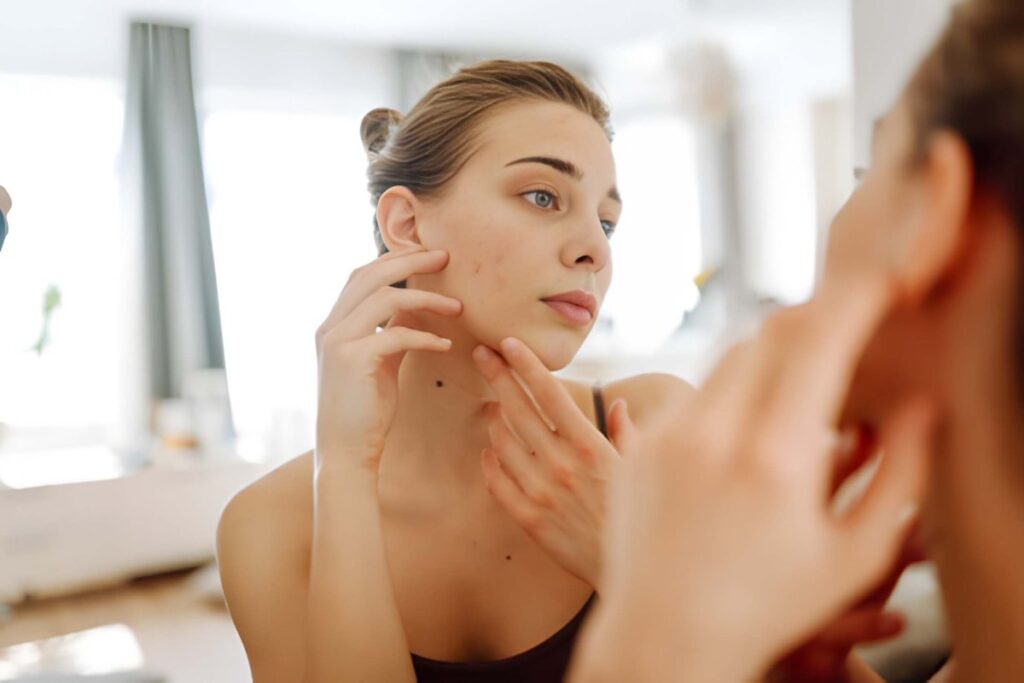
Acne Disease, a common skin disorder, is characterised by the blockage of hair follicles located just beneath the skin’s surface. The infections, sometimes called pimples or blackheads, occur when gone skin cells and sebum (an oil that assistances prevent dry skin) clog pores. Acne is common in oily skin.
Although breakouts occasionally occur on the back, chest, and shoulders, the face is the most common area. Acne is inflamed and affects the sebaceous glands, which connect to hair follicles that contain fine hairs. The pore, a follicular opening, allows sebum produced by the sebaceous glands to spread to the surface of the skin. The follicle is lined with keratin cells, another type of skin cell. It usually occurs when the skin is damaged.
Types of Acne
Shapes of Acne
Acne Disease causes many types of acne lesions or breakouts. Acne is medically described as inflamed or clogged hair follicles. There are several types of acne.
Whiteheads
A white bump caused by disrupted hair follicle growth under the skin.
Blackheads
Clogged follicles that rupture at the skin surface are known as blackheads. Instead of looking dirty, they appear black on the surface of the skin because the sebum has become contaminated with airborne particles.
Pores
Inflamed lesions that usually resemble small, pink pimples on the skin and may be tender. Pustules, sometimes called pimples, are papules with superficial lesions filled with white or yellow pus that may have a red base.
Nodules
Large, hard lesions are found deep under the skin.
Acne Treatment
Medical professionals and researchers have determined that acne can be caused by one or more of the following factors:
- Excessive or accelerated accumulation of oil within a pore.
- Accumulation of dead skin cells at the opening.
- Bacteria grow within the pore.
- Wash the affected areas no more than twice a day.
- Use lukewarm water and a mild soap or cleanser to wash the affected area. Water that is too hot or too cold can make acne worse.
- Never try to “squeeze” blackheads or pick at pimples.
The following factors can upsurge the likelihood of developing acne:
Acne Impact on Hormones
Acne can result from an increase in male sex hormones. During puberty, these hormones typically increase in both boys and girls, leading to enlarged sebaceous glands that produce more sebum. Acne can also result from hormonal vicissitudes related to pregnancy.
- Family history: Researchers say having parents who are prone to facial acne may increase your risk of developing it.
- Medications: Some medications, including hormonal ones, may contribute to acne. Diet: Some research suggests that eating certain foods may worsen acne.
- Researchers are still investigating how nutrition may contribute to acne.
- Exposure to backpacks, tight clothing, and sports helmets.
- Environmental irritants include high humidity and pollution.
- Picking or squeezing blemishes.
- Rubbing your skin too vigorously.
Kinds of Acne locations
Acne can cause six main types of pimples:
- They are not filled with pus;
- Whiteheads are like blackheads, but they can be harder and do not burst when squeezed.
- Nodules are large, hard lumps that form under the skin and can be painful.
- These are large, pus-filled bumps that resemble boils and collect.
- Wash affected areas no more than twice a day.
- Use warm water and a mild soap or cleanser to wash the affected area.
- Do not try to “squeeze” pimples or blackheads. This can make them worse and cause long-term damage.
What are the causes of acne?
Although it can start at any age, acne is often related with hormonal changes that occur during puberty.
The sebaceous glands near the hair follicles on the skin produce more oil (abnormal sebum) when certain hormones are released.
The harmless bacteria on the skin, Propionibacterium acnes, become more active due to abnormal sebum production, leading to irritation and the formation of pus.
In addition, hormones thicken the inner lining of the follicle, which clogs the pores. Cleansing the skin does not help remove this blockage.
Additional possible causes
Acne has been linked to family history. If both parents have acne, you are more likely to have it too. Women can also develop acne as a result of hormonal changes, such as those experienced during menstruation or pregnancy. No evidence that having sex or living an unhealthy lifestyle causes acne.
Who is impacted by Acne?
Teenagers and young adults are disposed to to acne. Most people experience recurring acne for several years before their symptoms improve as they age. Sometimes, acne can persist into adulthood. Among people over 35, acne affects about 3% of the population.
Use warm water and a mild soap or cleanser to wash the affected area. Don’t try to squeeze blackheads or whiteheads. This can make them worse and cause long-term damage. Avoid oil-based makeup, skin care, and sunscreen (often labelled “comedogenic”).
Use non-comedogenic, water-based products; they are less likely to clog your pores. If you have dry skin, use a fragrance-free, water-based emollient.
Even today, acne is a widespread inflammatory skin condition that often carries a significant psychological burden. Young people are often affected during a time of significant physical, emotional, and social change.
Conclusion
Although acne is not life-threatening, its severity can have a significant psychological impact (such as depression) and leave scars and discomfort for those affected. The sebaceous glands responsible for acne are located on the forehead and face because they provide a selective advantage by “lubricating” the largest part of the newborn, thus facilitating childbirth.