
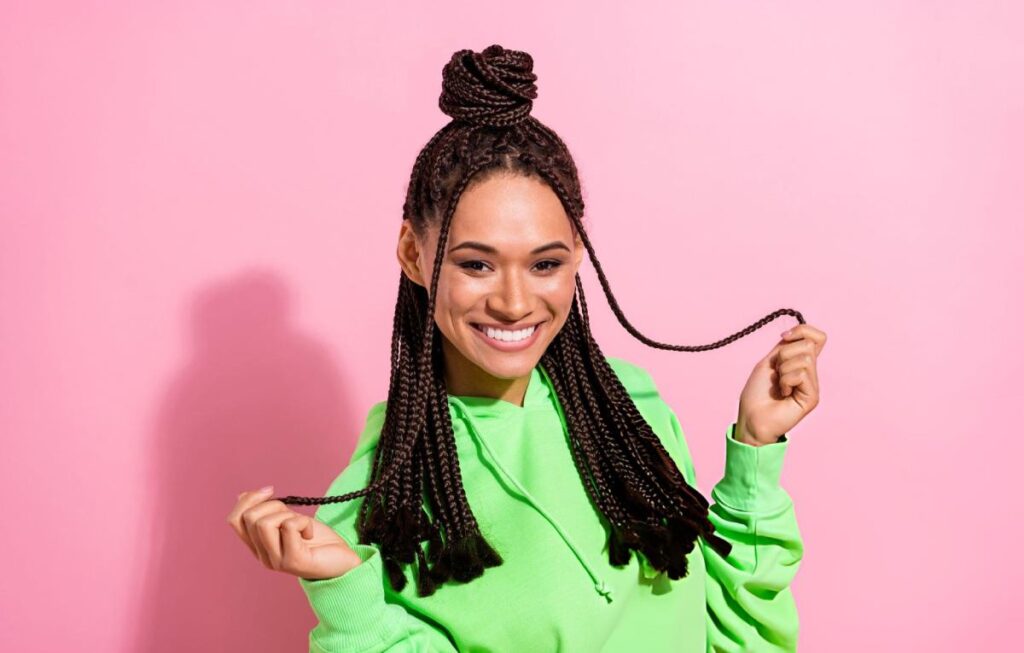
Knotless Braids: I enjoy playing with my hairstyles especially when doing protective styles and knotless braids is a new-found love. I mean, the classification right here is so chic and chic with their unbroken look of being.
Still, as much as I love how knotless braids look on others, I had a fear of getting them done on my fine hair.
Braiding the traditional way, however, appears to call for firm tension and hours in the stylist’s chair.
Which is why I went down the knotless braiding rabbit hole to learn about everything I could find. What I learned was knotless braids, when done correctly, were meant to be healthy for natural hair. This carefree, tangle-style also makes the journey through life feel as though your locks are sprouting naturally from the scalp.
Selecting the Right Stylist
Pick the Right Braider I think this is something important when it comes to getting knotless braids. You need someone with experience, who will listen and be careful not to stir up tension.
These are the characteristics you should pay attention to:
- He specializes in natural hair, helps you understand protective style and what your hair goals are. One could request to see the knotless examples of their work.
- Patient and digging deep: Quality knotless with braiding requires time Ensure they are not working to a deadline, doing anything in a hurry or taking a shortcut.
- Concentrating on your hair wellness: Select an individual who convinces you, they will treat your hair delicately. Discuss their techniques.
- Good communicator: Listens to you and honors your requests and limits. Speak up about any discomfort!
Picking Ideal Hair Extensions
Your knotless braids will be created by interweaving extension hair with your natural hair, so you must choose extensions that are similar to the texture of your own hair. Here is how to pick the right one:
- Hair Type: For coily/kinky textures, choose very textured, kinky extensions that will blend well with your own hair. Silky or lightly waved extensions are for the straight hair types.
- Match your extensions to your hair as closely as possible, to perfectly blend in the spot they grow in. Go lighter rather than darker.
- Quality – go for brands known for soft, tangle free human hair extensions that will not matt or frizz. Avoid rough synthetic fibers.
- Braiding hair length & size : Choose braiding hair at least 2 to 4 inches longer than the length you are currently wearing, braided styles shrink as they dry after being installed. For sizing, take into account the density of your hair and what look you desire.
Having the right extensions is key for stylists to work in and blend hair seamlessly, giving them an opportunity to be gentler with their braiding technique. Ensure your stylist possess premium extensions in your attributes Let us actually dive in!!!
Step-By-Step Knotless Braiding Process
If done correctly the knotless technique shouldn’t be too tight on your strands. Here is how it works:
First, shampoo your natural hair high fashion boutique style and condition & detangle it. It prepares hair to be parted easily.
- Using the desired parting pattern, partition hair into clean, even sections This is We recommend smaller square or triangular ones.
- Start braiding the first partition and about midway through with a “feed-in” method start adding in extensions. Do not knot the extensions.
- Braid down each section, ensuring the tension stays consistent and add in hair as you go. You should ideally feel secure but comfortable in knotless braids as well.
- Apply some dip/tap water or foam at the ends to hold braids in place. You can also use clear elastics or jewel tips for sealing.
Say no to stylists that do tight or fast braiding. Knotless braids are supposed to be gentle and soothing, not painful. Speak up about discomfort.
So, now let me describe to you how your new knotless will be properly taken care of afterwards.
Caring for Knotless Braids
The key to making your knotless braids look beautiful for longer is good maintenance. Follow these tips:
- Dry braids thoroughly for 48 hours before washing or exposing to water.
- Every other week, lightly shampoo with diluted, sulfate-free shampoo. Rinse thoroughly.
- Mist leave in conditioner throughout the braids avoiding roots.
- For sleep, you should have worn a silk bonnet or pillowcase. Loose braids at night: Tie up braids floppy a minimum of sometimes every single night.
- Avoid any heat styling, tight hair bands, heavy products, and anything that may chemically treat braids.
- Braid breaks: About every 6 to 8 weeks. Level 1: Time-Out Massage — Moisturize & massage scalp during down time.
Maintaining a regular maintenance routine will keep your braids looking amazing while supporting the health of your natural locks and scalp underneath. Do not pull braids far too limited between appointments.
Time to Take Down Braids
Removing your knotless braids is crucial, as they need adequate time to recover generally between 6 to 8 weeks. How to Cautiously Remove Braids:
- Start by detangling each individual braid using a fine-tooth comb or a wide-tooth comb on the ends and working up to the scalp with moisturizing leave-in conditioner.
- Cut the end of the extension with sharp scissors. Take your time to work with each braid.
- Once you begin to take out hair, saturate your whole head with a moisturizing conditioner or an oil to gain back moisture.
- Shampoo two times to clear out collected dirt then deep.
Knotless braids do require more skill, but the effort is totally worth it for the protective look and glamorous feel.
I want you to feel ready and able to embark upon your knotless braid journey with peace and ease now. The hair braiding technique that has been a revelation, and that I am sure you will also love to wear is this chic & pleasant style.
